


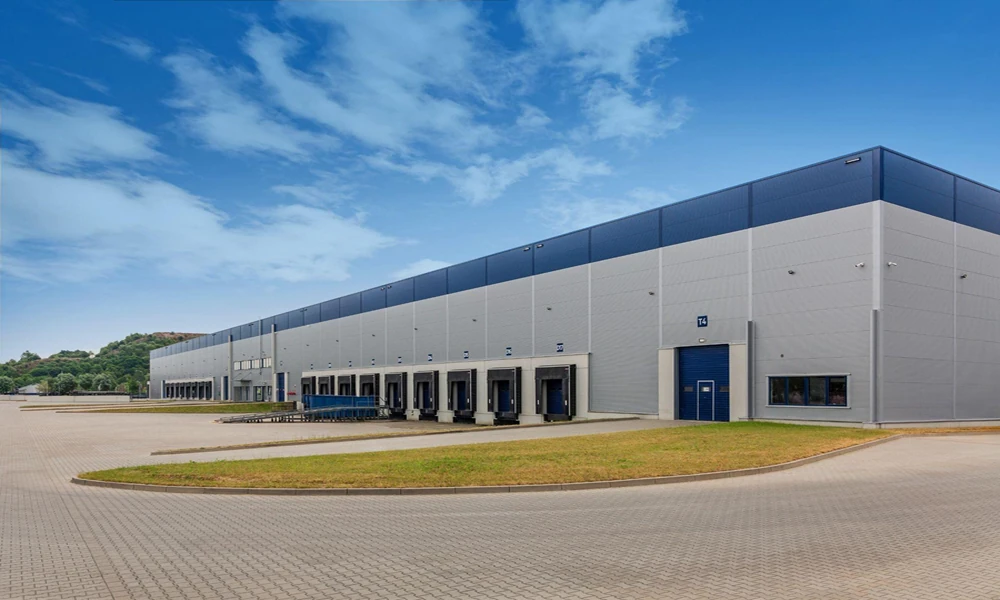
Industrial real estate can offer attractive opportunities for investors seeking income-producing properties with long-term utility. However, identifying a promising warehouse or distribution facility requires more than choosing a desirable location or comparing purchase prices.
Two industrial buildings in the same market can perform very differently depending on their physical specifications, tenant requirements, operating costs, and potential for future improvements.
Understanding the factors that influence an industrial property’s functionality and financial performance can help investors make more informed acquisition decisions.
Here are seven considerations that deserve attention before committing capital.
1. Transportation Access and Logistics Connectivity
Location remains important, but an industrial property’s value depends heavily on how effectively its location supports business operations.
Warehouses and distribution facilities benefit from convenient access to major highways, transportation corridors, suppliers, and customer markets. For certain tenants, proximity to ports, airports, or intermodal transportation facilities may also be valuable.
Investors should look beyond the distance to the nearest highway.
Road restrictions, traffic congestion, truck turning requirements, and delivery schedules can affect how efficiently tenants operate.
A property with excellent regional access but difficult truck circulation may be less attractive than a competing facility with more practical transportation connections.
Evaluating logistics accessibility from the tenant’s perspective helps establish whether a location offers sustainable operational advantages.
2. Building Specifications and Functional Flexibility
Not all industrial buildings accommodate modern business requirements equally.
Clear ceiling height, column spacing, loading configurations, floor capacity, and available electrical infrastructure can influence which businesses can realistically occupy a property.
For example, businesses requiring high-density storage may prioritize vertical clearance, while manufacturing users may place greater importance on power capacity and production layouts.
Investors should also consider whether the building can accommodate different uses without extensive renovations.
A property designed around highly specialized operations could face a smaller pool of potential replacement tenants.
Functional flexibility can therefore contribute to leasing resilience and future marketability.
3. Tenant Quality and Lease Structure
An attractive industrial building does not automatically translate into a dependable investment.
Tenant financial stability, operational requirements, and lease obligations are equally important.
Before acquiring a tenant-occupied property, investors should examine the remaining lease term, rental escalation provisions, renewal options, and responsibility for maintenance expenses.
They should also understand how essential the facility is to the tenant’s operations.
A distribution center that supports an established logistics network may serve a different operational purpose than a warehouse used for temporary overflow storage.
Neither arrangement guarantees continued occupancy, but understanding the business behind the lease helps investors assess potential income stability.
Investors should also evaluate the consequences of a vacancy, including downtime, leasing commissions, tenant improvements, and potential rent concessions.
4. Evaluate the Property as an Investment, Not Just a Building
Physical condition and current rental income provide only part of the investment picture.
Successful property evaluation requires connecting building-level characteristics with the broader financial strategy.
An acquisition may involve preserving existing income, improving operations, modernizing outdated facilities, or repositioning a property for different users.
Each approach carries distinct financial requirements and execution risks.
For investors exploring industrial real estate investment, understanding the relationship between acquisition strategy, asset management, and long-term property performance is an important part of assessing opportunities.
A disciplined investment review should consider whether projected returns depend on realistic assumptions about leasing demand, capital improvements, financing costs, and eventual disposition.
Investors should stress-test those assumptions rather than relying exclusively on an optimistic financial projection.
A property that appears attractive under ideal conditions may become considerably less appealing when vacancy periods, repair costs, or refinancing difficulties are incorporated into the analysis.
5. Future Maintenance and Capital Expenditure Requirements
Industrial properties may appear relatively straightforward to maintain, but major building systems can require substantial investment.
Roofing, pavement, loading equipment, fire protection systems, electrical infrastructure, and heating or cooling systems can create significant ownership expenses.
Deferred maintenance may not be immediately obvious during a routine property tour.
A warehouse with competitive rental income could still require major repairs shortly after acquisition.
Investors should commission appropriate property inspections and review available maintenance records before finalizing an acquisition.
It is also helpful to distinguish routine operating expenses from major capital expenditures.
Establishing realistic reserves for future improvements can prevent unexpected costs from undermining anticipated investment returns.
Importantly, some improvements may enhance tenant appeal, while others simply restore the building to an acceptable operating condition.
Understanding that distinction supports better capital allocation.
6. Local Supply, Demand, and Competition
Industrial real estate performance is influenced by conditions within specific submarkets.
An attractive building may face difficulties maintaining occupancy if competing properties offer superior functionality, newer infrastructure, or more favorable lease terms.
Investors should examine existing inventory, recently completed developments, proposed construction, and the types of tenants actively seeking space.
Market-wide statistics alone may conceal important differences between property sizes and building categories.
For example, demand for smaller service-oriented industrial units may differ substantially from demand for large distribution centers.
Evaluating comparable properties helps investors understand where a potential acquisition fits within the local competitive landscape.
It also provides context for assumptions about market rents, leasing periods, and potential improvements.
7. Environmental, Zoning, and Regulatory Considerations
Industrial property acquisitions require careful attention to legal and environmental constraints.
Historical site uses, potential contamination, permitted activities, and applicable zoning regulations can affect how a property is occupied or redeveloped.
Certain operations may require additional permits or building modifications.
Investors should determine whether current and anticipated tenant uses comply with local requirements.
Environmental due diligence is particularly important because remediation responsibilities can introduce financial and legal exposure.
Qualified environmental, engineering, and legal professionals can help identify issues that may not be apparent through financial documents or visual inspections.
Addressing these matters before closing can reduce the likelihood of costly surprises.
Conclusion
Evaluating an industrial property requires a balance of operational understanding, financial discipline, and long-term planning.
Transportation access, functional building design, tenant stability, capital requirements, market competition, and regulatory conditions all influence an asset’s investment potential.
Rather than relying on purchase price or location alone, investors benefit from examining how these factors interact.
A comprehensive due diligence process cannot eliminate every risk, but it can help distinguish properties with durable operating advantages from those whose apparent value depends on overly optimistic assumptions.
Ultimately, the most informed investment decisions come from understanding not only what a property is worth today, but also what it will take to keep it competitive in the years ahead.