

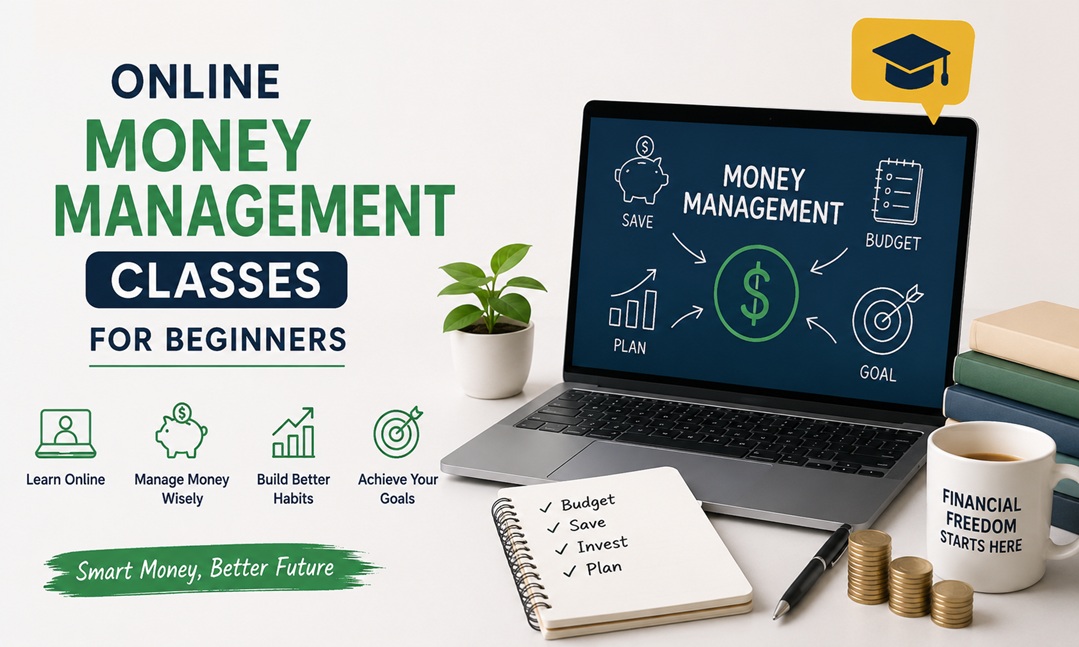
If you want to get better at managing money but have no idea where to start, you are not alone. The best online money management classes for beginners are free or low-cost, self-paced, and cover the basics without assuming any prior financial knowledge. Khan Academy, Coursera, and edX all offer strong starting options.
Here are the questions beginners usually ask — and the honest answers.
“Do I Need to Pay for a Good Class?”
Not at all. Some of the best financial education available is completely free.
Khan Academy’s Personal Finance section covers budgeting, saving, debt, and investing. It is written clearly, uses short video lessons, and costs nothing. The content was developed with input from financial professionals and is widely used in schools across the US.
The National Endowment for Financial Education (NEFE) in the US offers a free program called NEFE High School Financial Planning Program that is equally accessible to adults.
In the UK, the Money and Pensions Service runs a free resource called MoneyHelper with structured guides that effectively work like an informal course.
“Which Paid Courses Are Actually Worth It?”
Coursera’s Personal Finance for Beginners by Duke University is one of the most respected paid options. It covers budgeting, banking, credit, insurance, and retirement planning in about 10 hours. Through Coursera’s financial aid programme, you can access it for free.
Udemy regularly discounts its financial literacy courses to under $15. Look for courses with over 1,000 reviews and a rating above 4.3.
The Australian Securities and Investments Commission (ASIC) runs MoneySmart, which offers free tools, calculators, and structured educational content particularly relevant for Australians.
“What Will I Actually Learn?”
A good beginner money management class will cover:
How to build a budget that reflects your real life, not a theoretical one. How to build an emergency fund even when money is tight. The difference between good and bad debt, and how interest really works. Basic credit score education. How to set savings goals that are achievable. A first look at investing and retirement planning.
You do not need to master all of this at once. Most good programs let you go at your own pace and return to sections that need more time.
“How Long Will It Take?”
Most beginner courses run between 4 and 15 hours of total content. At two hours a week, that is 2 to 8 weeks. Many people complete them faster once they get started.
The key is not the time — it is applying what you learn. Even one practical change per module (like setting up a weekly budget or opening a separate savings account) turns education into real results.
“Will I Get a Certificate?”
Paid platforms like Coursera and edX typically offer a verified certificate upon completion. This can be added to a LinkedIn profile or resume, which is useful if you work in finance, administration, or any role that involves handling money.
Free platforms like Khan Academy do not always issue formal certificates, but the knowledge itself is the real outcome.
A Practical Example
Someone earning a mid-range salary who completed a 10-hour beginner budgeting course found that they had been spending nearly twice what they thought on food delivery services. After tracking it through the course’s exercise, they redirected that amount to an emergency fund. Within four months they had saved enough to cover an unexpected car repair without going into debt.
That is the kind of outcome these courses are designed to create. Not overnight transformation — just clearer decisions, made more often.